
Recruitment in 2026: The Major Shift Toward a Human-Centric Talent Strategy
The way organizations find, attract, and hire talent has changed fundamentally. Recruitment in 2026: a human-centric talent strategy is no longer a futuristic concept it is the operating reality for businesses that want to grow, compete, and retain great people in an increasingly disrupted workforce landscape.
If you are a business owner or SaaS founder navigating modern workforce demands, you already know the old playbook is broken. Posting a job description and waiting for the right resume to land in your inbox? That era is over. What has replaced it is a smarter, faster, and more human-centred approach, one that combines the power of artificial intelligence with the irreplaceable judgment of skilled HR professionals and hiring leaders.
This article breaks down exactly what has changed, what it means for your organization, and what you need to do to stay ahead.
What Is a Human-Centric Talent Strategy in 2026?
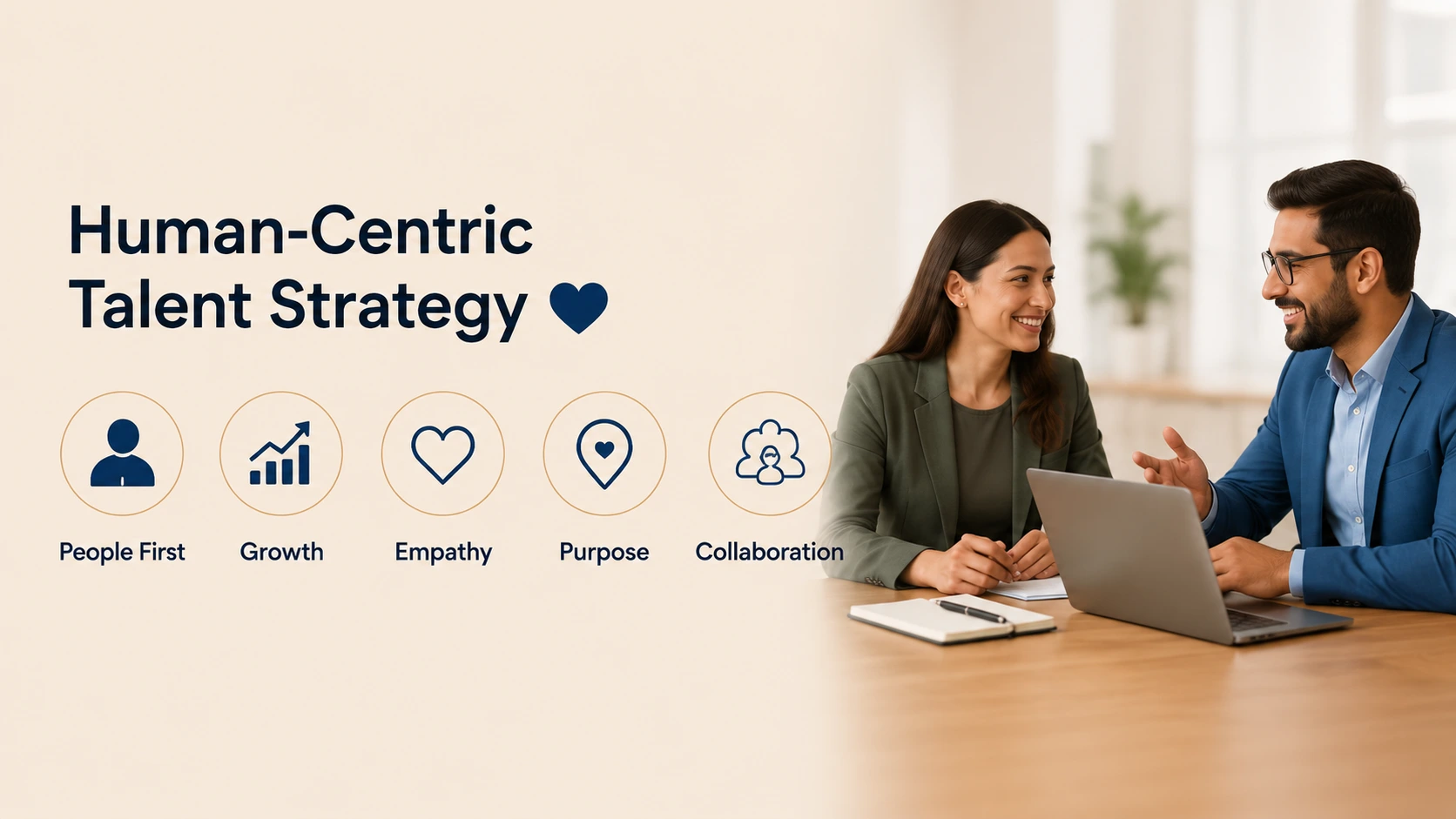
Definition: A human-centric talent strategy is a recruitment and workforce planning approach that places the skills, experience, growth, and well-being of candidates and employees at the centre of every hiring decision, supported (not replaced) by data, automation, and AI.
In practice, this means organizations are:
Evaluating candidates on practical performance, not just credentials
Building long-term talent pipelines rather than reacting to individual vacancies
Creating transparent, respectful candidate experiences that reflect employer brand values
Using AI as a tool, not a decision-maker, in the hiring process
This shift represents one of the most significant recruitment transformations in modern business history.
Why Recruitment in 2026 Looks Nothing Like 2020
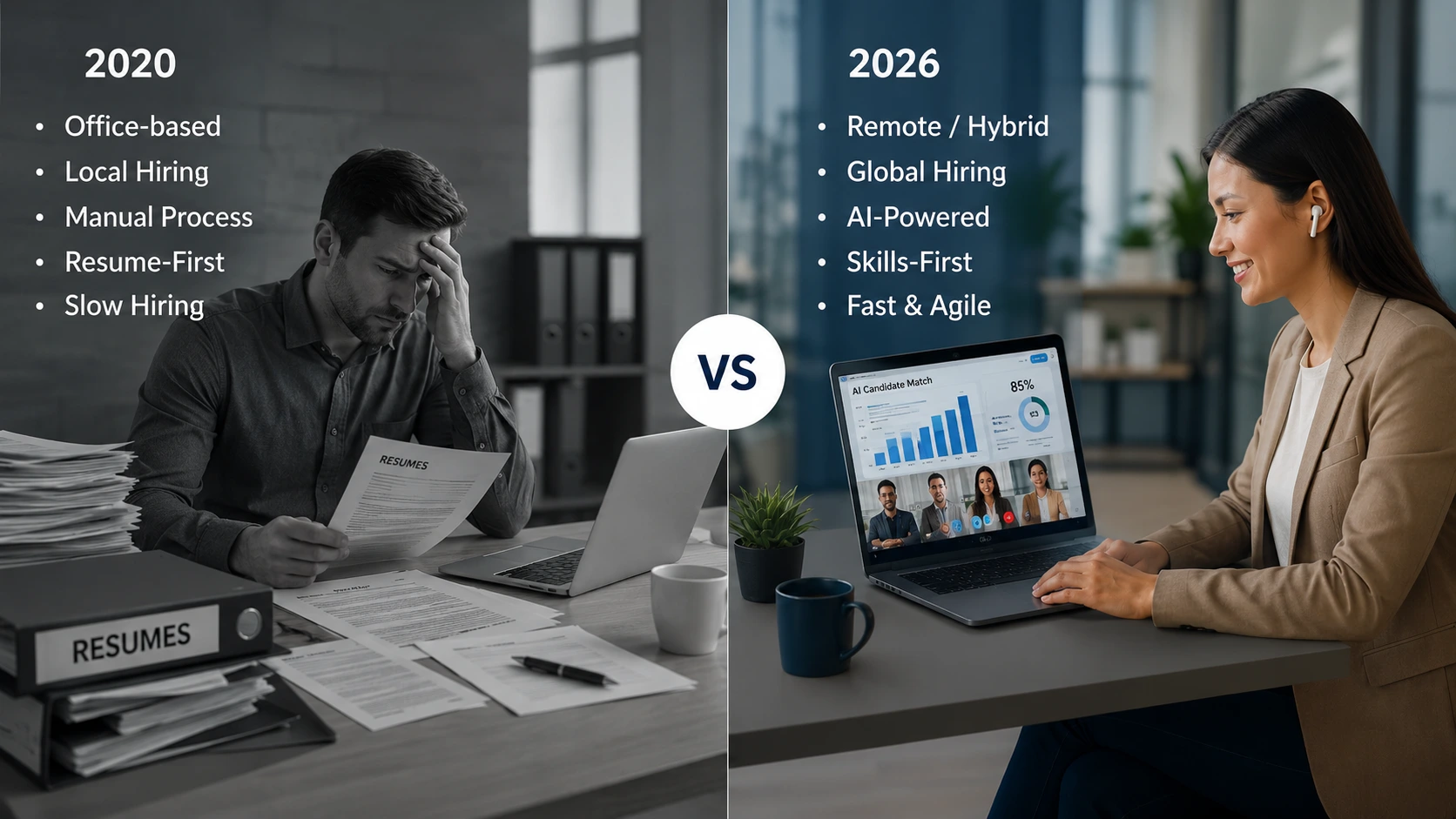
Between 2020 and 2026, several forces converged to reshape hiring permanently:
The normalization of remote and hybrid work dissolved geographic hiring barriers
AI and automation have matured enough to handle large-scale candidate screening
The Great Talent Shortage forced companies to compete harder for skilled professionals
Skills-based hiring gained credibility over degree-based filtering
Candidate expectations rose dramatically. People now demand transparency, speed, and respect throughout the hiring process
These pressures did not just change HR practices. They changed the future of HR management as a strategic business function. HR leaders today sit at the executive table, not in the back office.
The Shift from Reactive Hiring to Predictive Hiring Models
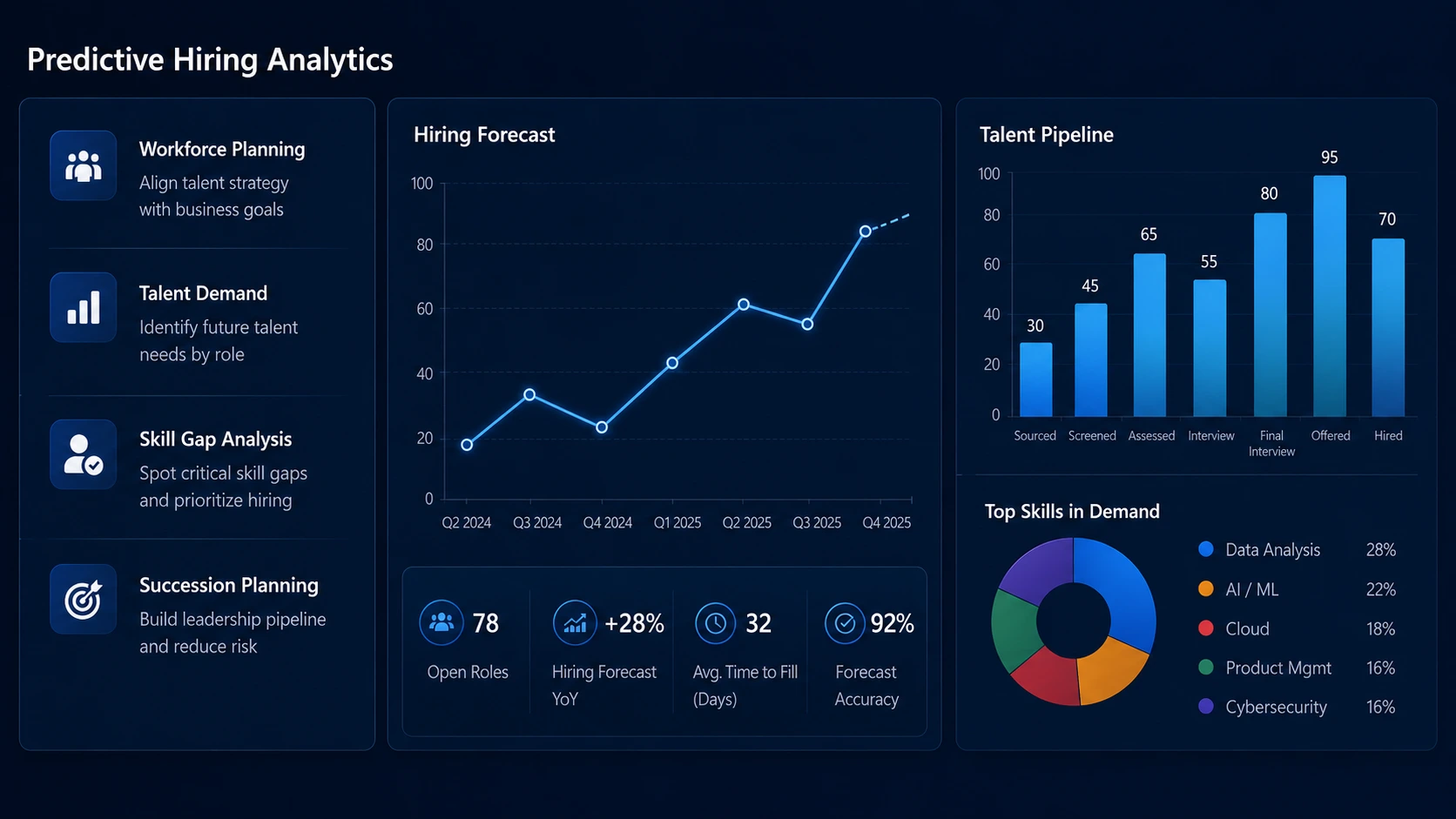
One of the clearest indicators of this recruitment transformation is the move from reactive to predictive hiring.
In the past, a company hired when someone quit. That reactive approach created productivity gaps, rushed decisions, and high rates of early employee turnover.
Today, forward-thinking organizations use predictive hiring models powered by workforce analytics. These models analyze:
Historical employee turnover patterns
Business expansion timelines and headcount forecasts
Market-level skill demand data
Internal mobility gaps and succession planning needs
The result is a recruitment strategy plan built around the future, not the present. Organizations can build talent pipelines 6 to 18 months ahead of actual need, reducing time-to-hire, improving quality of hire, and protecting business continuity.
Expert Insight: Companies that adopt predictive workforce planning tools report significantly reduced time-to-hire and better retention outcomes compared to those still relying on vacancy-driven recruitment cycles.
The Death of Resume-First Hiring
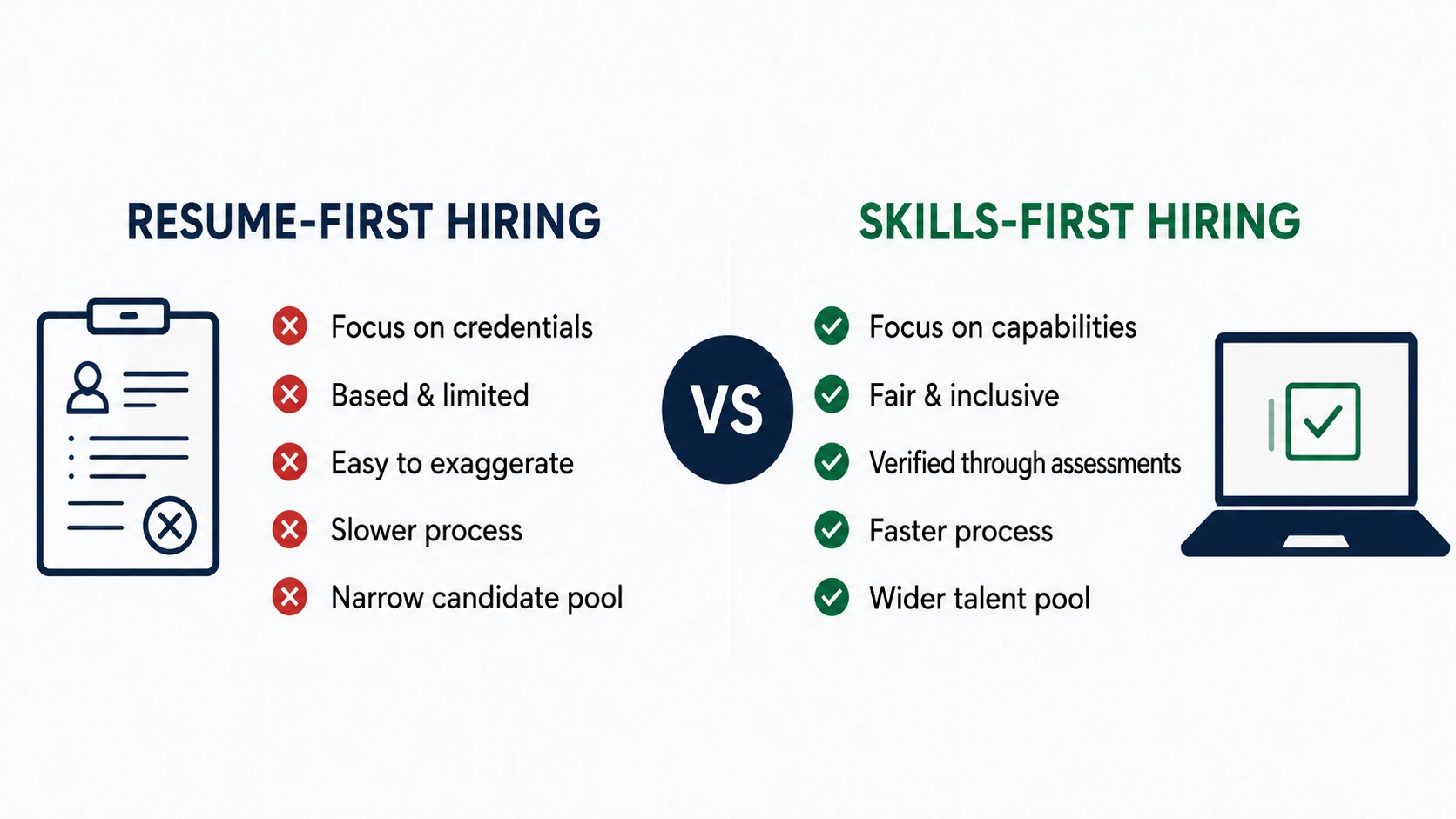
The traditional resume-based screening process has been one of the most persistent bottlenecks in recruitment, and in 2026, it is losing its grip as the primary hiring filter.
Why resumes fail:
Resume-Based Hiring | Skills-Based Hiring |
Filters on credentials, not capability | Evaluates real-world performance |
Biased toward prestigious institutions | More inclusive, performance-first |
Easy to exaggerate or fabricate | Verified through tasks and simulations |
Slow, linear process | Faster, more predictive of success |
Narrowing candidate pools unnecessarily | Expands access to diverse talent |
Modern recruitment strategies now use a combination of:
Skill-based assessments tailored to the actual role
Job simulations and technical exercises that mirror real work conditions
Digital portfolios that showcase genuine output and thinking
Structured behavioural interviews focused on demonstrated competencies
This shift has made hiring more equitable, more accurate, and, critically for business owners, more predictive of on-the-job success.
Artificial Intelligence in Recruitment: The Balanced Model
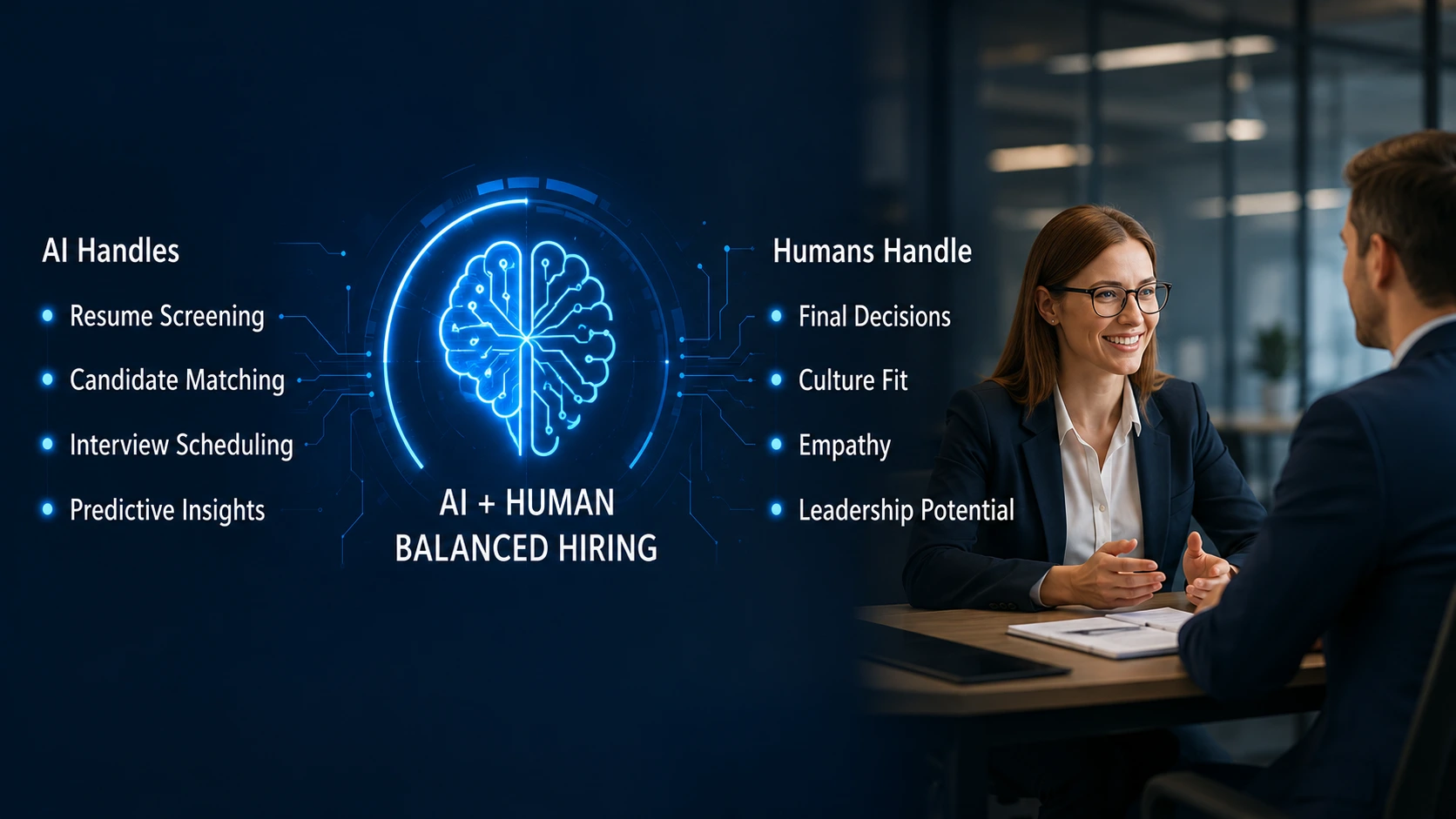
No honest discussion of modern recruitment strategies in 2026 can ignore artificial intelligence. AI is now embedded across the full hiring lifecycle:
Where AI adds the most value:
Automated resume screening AI tools surface qualified candidates from large applicant volumes in seconds, applying consistent, bias-reduced criteria
Candidate matching algorithms map candidate skill profiles against role requirements with significantly higher precision than manual review
Interview scheduling automation eliminates the back-and-forth that wastes recruiter and candidate time
Predictive attrition signals identify candidates most likely to stay and succeed based on historical patterns
Where humans remain essential:
Final hiring decisions are particularly for culture fit, team dynamics, and long-term potential
Navigating complex candidate conversations with empathy
Evaluating emotional intelligence, leadership potential, and adaptability
Ensuring AI recommendations are reviewed for fairness and context
The most effective organizations in 2026 operate a Human + AI decision-making model using automation to handle volume and speed while reserving human judgment for what matters most.
This balance is at the heart of recruitment in 2026: a human-centric talent strategy. The technology serves the human outcome, not the other way around. Borderless Hiring: Global Talent Acquisition at Scale
Remote and hybrid work has permanently restructured where talent can come from. Global talent acquisition is no longer the exclusive domain of large enterprises SaaS founders and mid-size businesses now recruit across continents as a matter of course.
This creates both opportunity and complexity:
Opportunities:
Access to larger, more diverse talent pools
Competitive cost advantages in certain geographies
Around-the-clock operational coverage across time zones
Complexity:
Legal and compliance requirements vary significantly by country
Cultural alignment and communication become more deliberate priorities
Remote onboarding systems and digital HR platforms must replace in-person processes entirely
Organizations navigating global talent acquisition successfully are investing in cloud-based HR platforms, structured virtual onboarding journeys, and asynchronous collaboration tools that make location genuinely irrelevant to performance.
Candidate Experience as a Strategic Priority
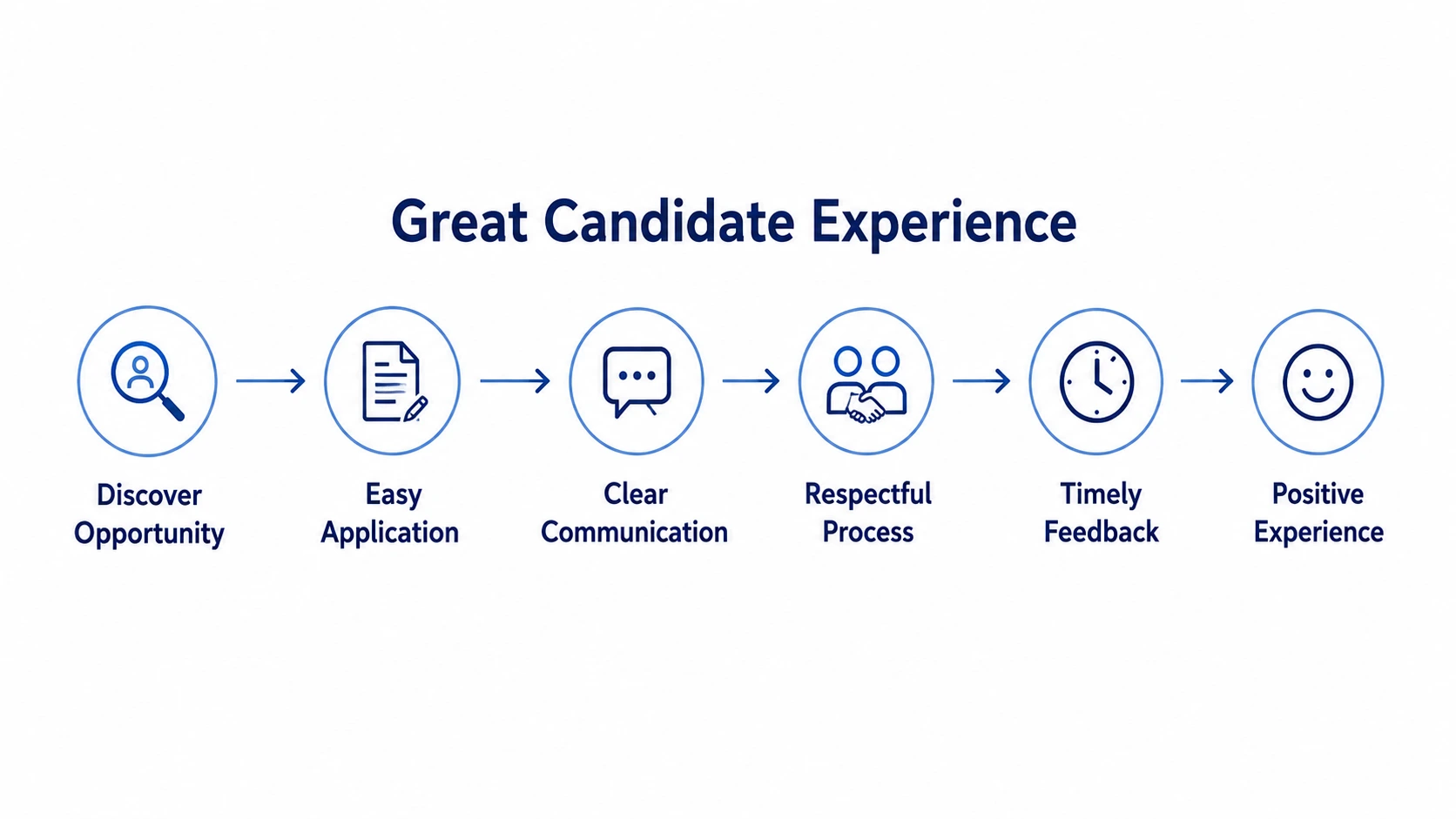
In a competitive hiring environment, candidate experience has become a direct driver of employer branding. The way someone is treated during a hiring process, whether they get the job or not, shapes how they talk about your company to their network.
Strategic trends in talent acquisition increasingly treat the candidate journey as a product experience:
Speed: Top candidates are off the market within 10 days. Slow processes lose the best people.
Transparency: Candidates expect clear timelines, honest feedback, and consistent communication.
Respect: Ghosting candidates, the practice of simply going silent after interviews, damages employer brand in measurable ways on platforms like LinkedIn and Glassdoor.
Simplicity: Overly complex application processes correlate directly with drop-off rates among highly qualified candidates.
For SaaS founders, especially, employer branding is often underestimated. In a world where your next senior engineer or growth lead may research your company culture before they ever speak to a recruiter, every touchpoint in the hiring process sends a signal.
Internal Mobility: The Underused Competitive Advantage
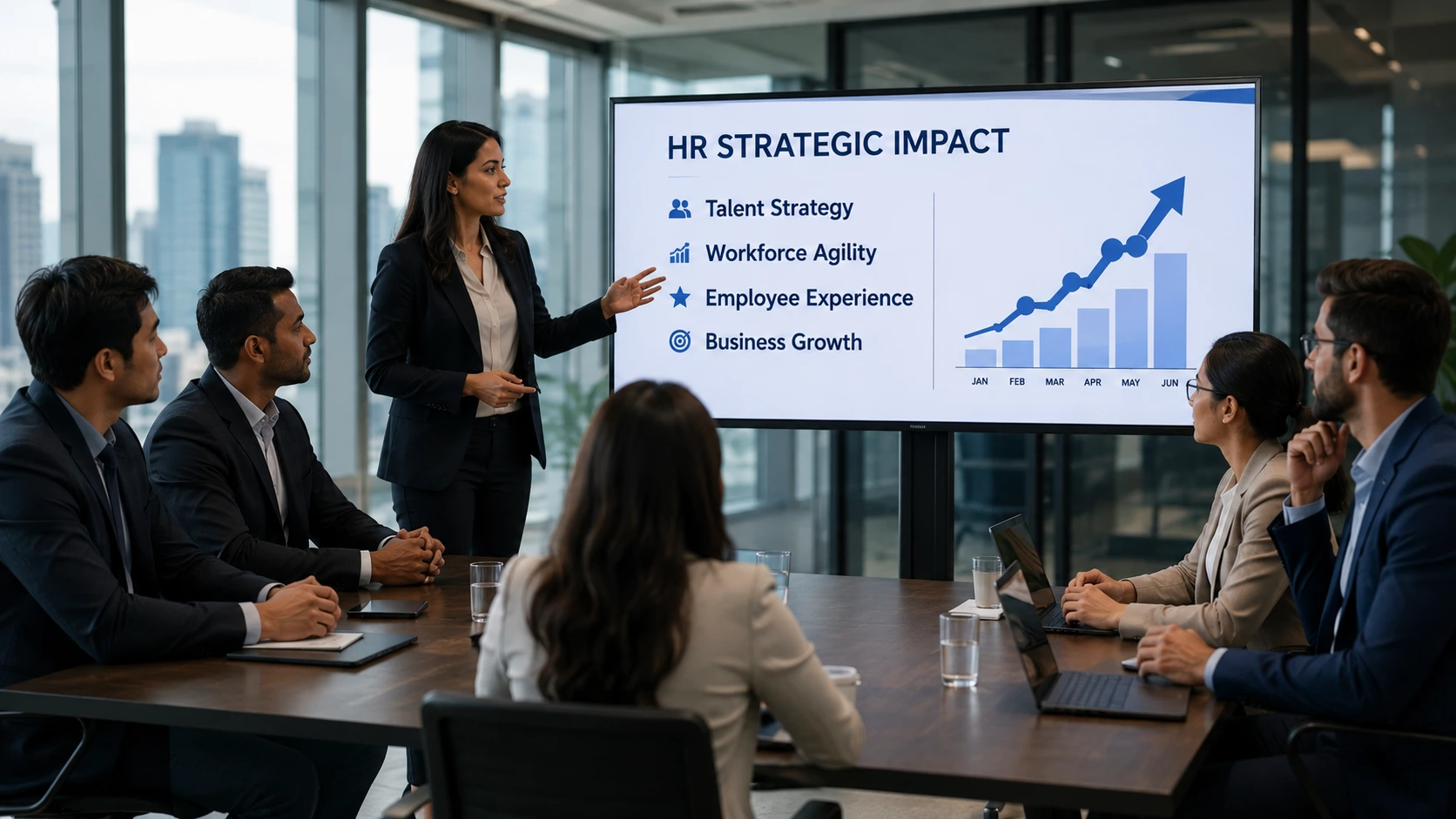
One of the most cost-effective and underused recruitment strategies in 2026 is internal mobility, the systematic process of filling open roles from within the existing workforce.
Why it matters:
Internal hires onboard faster and reach full productivity sooner
Retention improves when employees see a clear path for growth
Institutional knowledge is preserved rather than replaced
Hiring costs, such as advertising, recruiter fees, and interview time, are eliminated
Organizations with strong internal mobility programs pair them with skill gap analysis systematically identifying where current employees have growth potential and investing in targeted development before a role ever becomes vacant.
This is part of what separates transactional HR from truly strategic trends in talent acquisition: building a workforce ecosystem that grows with the business, rather than constantly importing new talent at high cost.
Emotional Intelligence and Behavioural Fit: Beyond Hard Skills
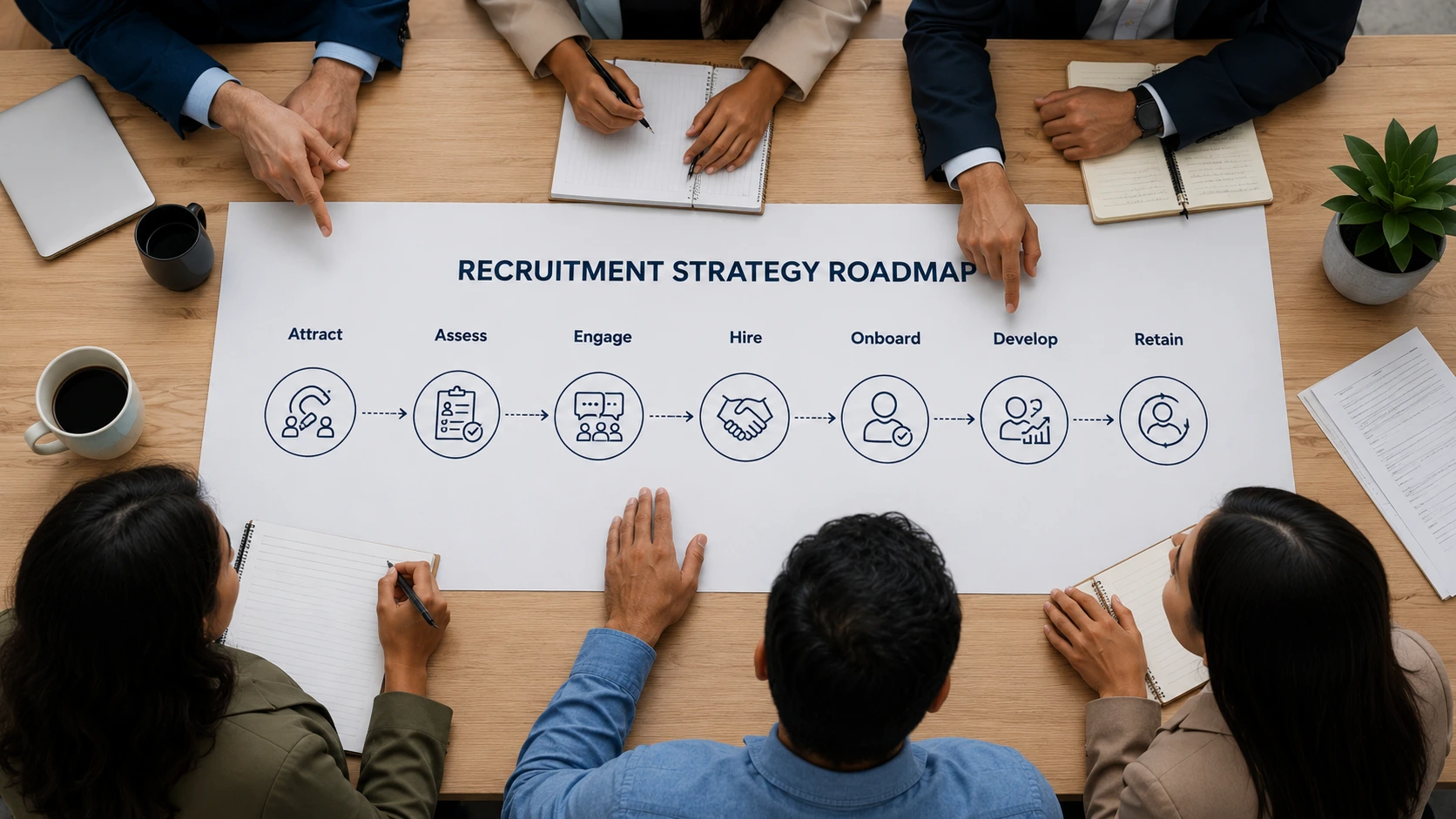
Practical performance matters enormously in 2026 hiring but technical competence alone is not the full picture. Research consistently shows that most early employee failures are attributed to cultural misalignment and interpersonal issues, not lack of technical ability.
Modern recruitment strategies now include structured evaluation of:
Communication: How clearly and constructively does this person express ideas?
Adaptability: How do they perform when conditions change quickly?
Collaboration: Do they build trust with peers and stakeholders?
Self-awareness: Can they receive feedback and course-correct?
Behavioral assessments, structured reference conversations, and situational judgment tests have all become standard tools in the hiring toolkit. This is not a soft trend it is one of the most reliable predictors of long-term retention and team performance.
The Rise of Contract and Freelance Workforce Management

Contract workforce management has become a core component of recruitment strategy plans across industries. The freelance economy has matured significantly, and organizations in 2026 are not just tolerating it, they are designing their talent strategies around it.
Why the shift:
Specialized, high-demand skills can be accessed project-by-project without full-time overhead
Business agility increases when workforce capacity can flex with demand
Access to global specialists in design, engineering, marketing, and operations has never been easier
For SaaS founders, this is particularly relevant. The ability to bring in a senior product designer for a launch sprint, or a data scientist for a model-build, without long-term commitment transforms how small teams compete with larger organizations.
The key to making this work is clear contract workforce management infrastructure: defined agreements, payment systems, IP protections, and structured collaboration processes.
Comparison: Traditional Recruitment vs. Recruitment in 2026
Dimension | Traditional Recruitment | Recruitment in 2026 |
Hiring trigger | Vacancy appears | Predictive pipeline planning |
Primary filter | Resume and credentials | Skills assessment and simulations |
Screening process | Manual, linear | AI-assisted, parallel |
Geographic scope | Local or national | Global by default |
Candidate experience | Inconsistent, slow | Structured, transparent, fast |
Decision-making | HR-led gut feel | Data-informed human judgment |
Workforce model | Full-time dominant | Blended full-time, contract, freelance |
Internal talent | Rarely prioritized | Central to retention strategy |
HR role | Administrative support | Strategic business partner |
Direct Answer: What Is the Core of a Human-Centric Talent Strategy in 2026?
The core of a human-centric talent strategy in 2026 is this: organizations design every aspect of their recruitment, onboarding, and workforce development process around the needs, capabilities, and growth potential of people using AI and data to make those processes faster and more accurate, while keeping human judgment at the center of every important decision.
It means:
Hiring for practical performance, not pedigree
Building talent pipelines ahead of need
Creating candidate experiences that reflect company values
Investing in internal mobility and skill development
Using automation where it adds speed, and human insight where it adds quality
This is not just an HR philosophy. It is a recruitment strategy plan with direct business outcomes: lower cost-per-hire, faster time-to-productivity, stronger retention, and a workforce built for the future.
FAQ: Recruitment in 2026 People Also Ask
Q1: What is a human-centric talent strategy? A human-centric talent strategy is an approach to recruitment and workforce planning that prioritizes the skills, experience, and growth potential of people. It uses AI and data to improve efficiency, while keeping human judgment central to hiring decisions, onboarding, and employee development.
Q2: How is AI used in recruitment in 2026? AI is used primarily for automated resume screening, candidate-role matching, interview scheduling, and predictive hiring analytics. Final hiring decisions remain with human recruiters to ensure fairness, contextual accuracy, and cultural fit evaluation.
Q3: What is a predictive hiring model? A predictive hiring model uses workforce analytics, historical data, and business planning inputs to forecast future talent needs before vacancies arise. This enables organizations to build talent pipelines proactively, reducing time-to-hire and improving hiring quality.
Q4: Why is candidate experience important in modern recruitment? Candidate experience directly affects employer branding. How candidates are treated during the hiring process — regardless of the outcome — influences how they perceive and talk about the company publicly. A poor experience damages talent brand reputation and reduces future applicant quality.
Q5: What is skills-based hiring and why is it replacing resume screening? Skills-based hiring evaluates candidates on demonstrated ability through assessments, job simulations, and digital portfolios rather than filtering on credentials or institutional background. It produces more accurate predictions of job performance and creates more inclusive hiring pipelines.
Q6: How do organizations build global talent pipelines in 2026? Organizations use cloud-based HR platforms, remote onboarding systems, asynchronous collaboration tools, and structured cross-border compliance frameworks to recruit and manage talent globally. Remote-first infrastructure allows hiring to be location-agnostic.
Q7: What role does internal mobility play in modern recruitment strategy? Internal mobility is increasingly recognized as one of the highest-ROI talent strategies available. By promoting, redeploying, and developing existing employees, organizations reduce external hiring costs, improve retention, preserve institutional knowledge, and accelerate workforce adaptability.
Conclusion: The Future of Hiring Is Already Here
Recruitment in 2026: a human-centric talent strategy is not a trend to watch it is a business imperative to act on now.
Organizations that treat hiring as a purely administrative function will fall behind those that treat it as a strategic capability. The companies winning the talent market in 2026 are the ones that have invested in predictive hiring models, built borderless talent pipelines, created exceptional candidate experiences, and deployed AI as an amplifier of human judgment, not a replacement for it.
For business owners and SaaS founders, the question is not whether this shift affects you. It does. The question is whether your recruitment strategy plan is built for the workforce landscape that already exists or the one that existed five years ago.
Start with an honest audit of where your hiring process stands today. Where does candidate experience break down? Where are you still filtering on credentials instead of capability? Where could predictive analytics give you an edge on talent acquisition?
The organizations that answer those questions and act on them will build teams that fuel the next decade of growth.