 How to Get Clients: A Practical Guide to Client Outreach Strategies
Every business owner eventually asks the same question: how do you get clients when your calendar is empty and your inbox is quiet? The answer isn't luck, and it isn't spending more on ads. It's having a repeatable system. This guide breaks down the client outreach strategies that actually move prospects from "never heard of you" to "let's schedule a call" without relying on guesswork.
If you're a founder, consultant, agency owner, or sales lead trying to build a predictable pipeline, this is the playbook.
What Is Client Outreach, Really?
Client outreach is the practice of proactively contacting potential customers who might need your product or service, rather than waiting for them to find you. It's the opposite of inbound marketing, where people discover you through ads, search engines, or content.
Understanding cold outreach vs inbound marketing matters because they solve different problems. Inbound is patient and compounding. Outreach is direct and immediate you choose exactly who to talk to and when.
For service businesses, especially in IT, consulting, and digital marketing, outreach creates a controllable sales pipeline instead of hoping the phone rings.
How Do You Get Clients?
If you only read one section, read this one.
To get clients consistently, you need four things working together:
A clearly defined ideal customer
A way to reach decision-makers directly
A personalized message that shows relevant insight
A structured follow-up process, tracked over time
Skip any one of these and outreach turns into spam. Combine them, and client outreach strategies become a repeatable engine rather than a one-time push.
Step 1: Build Your Ideal Customer Profile (ICP)
Before writing a single message, define who you're actually trying to reach. An Ideal Customer Profile (ICP) narrows your focus to the businesses most likely to buy, based on:
Industry and business model
Company size and location
Current digital presence
Technology or operational gaps
Who the actual decision-makers are
A digital agency, for example, might build an ICP around healthcare clinics, real estate firms, or e-commerce brands with outdated websites. Without an ICP, outreach teams waste hours contacting businesses that were never going to convert. With one, every message has a clear reason to exist.
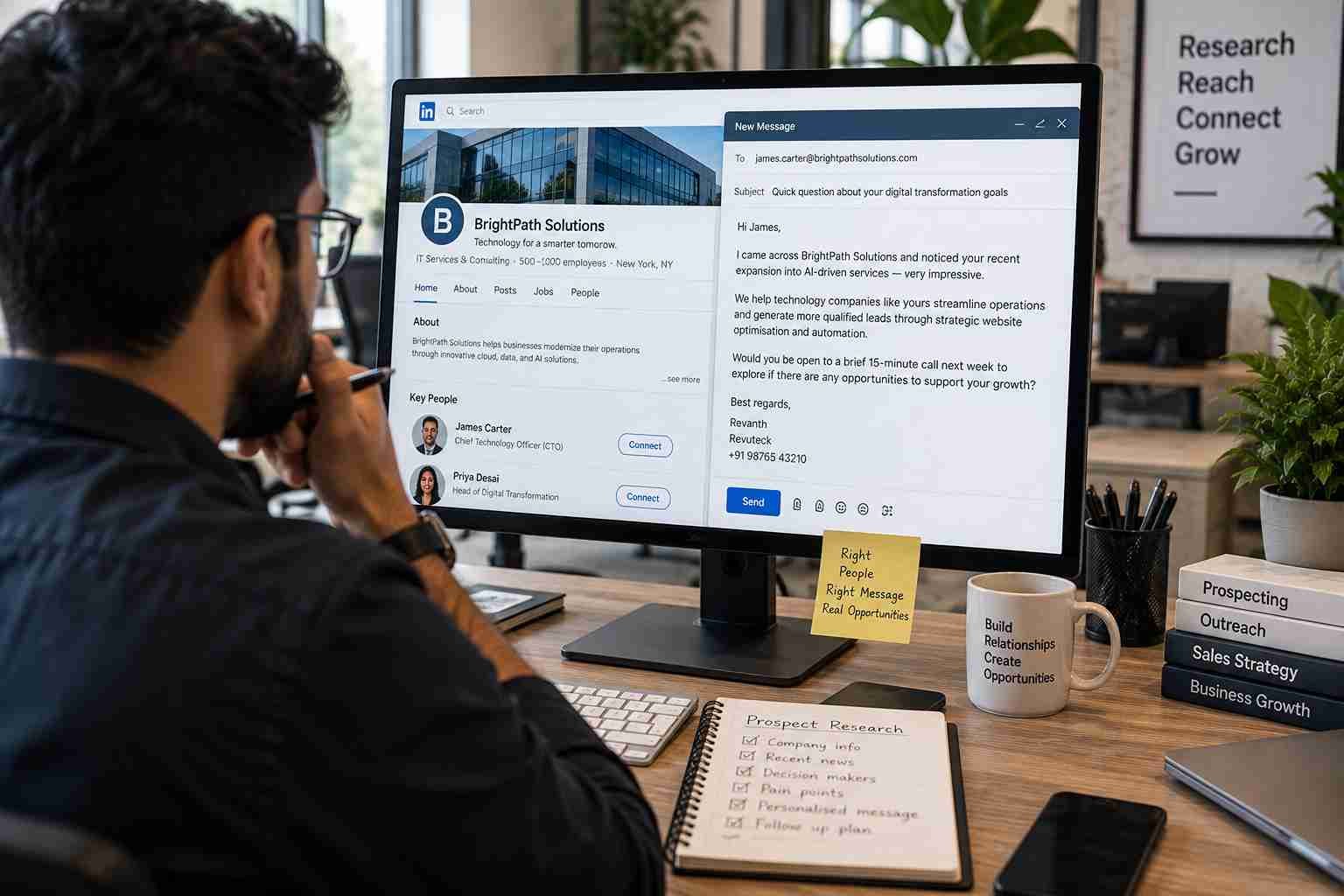
Step 2: LinkedIn Outreach for B2B
LinkedIn outreach for B2B remains one of the highest-leverage channels for reaching founders, CTOs, marketing leads, and operations heads directly.
The mistake most people make is treating LinkedIn like a numbers game mass connection requests, copy-paste pitches. That approach kills response rates.
Instead:
Research the prospect's role, recent posts, and business focus first
Reference something specific to their company, not your service list
Lead with a relevant observation, not a sales pitch
A message like "We do IT services, interested?" gets ignored. A message that references their recent expansion and a specific operational bottleneck gets replies. This is what separates functional LinkedIn outreach for B2B from noise.
Step 3: Prospecting Beyond LinkedIn
Effective prospecting doesn't stop at one platform. Three underused channels:
Google Maps Prospecting
Search for local businesses clinics, hotels, retailers then check their website and social presence. A strong physical business with a weak digital presence is a natural opening for a relevant pitch.
Social Media Prospecting
Instagram and Facebook reveal inconsistent branding, low engagement, or missed opportunities in industries like hospitality, fitness, and retail useful signals for a tailored message.
Business Directories and Industry Networks
Directories and associations group companies by sector, giving you a filtered, higher-intent prospect list rather than a generic database of contacts.
Step 4: Cold Email Outreach That Gets Replies
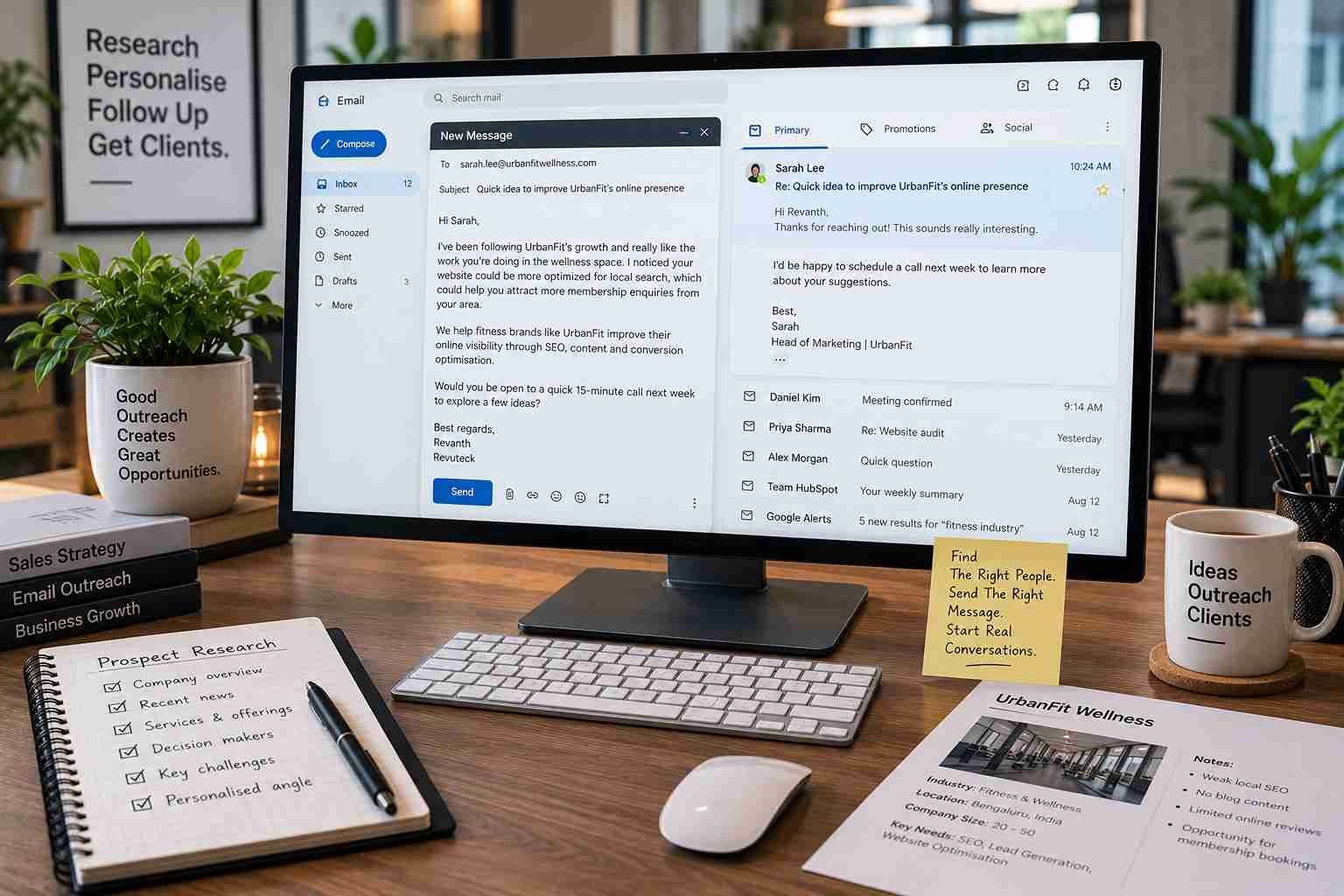 Cold email outreach still works when it's built around relevance instead of volume. A strong outreach email template includes:
A personalized opening tied to their business
One specific, relevant observation
The likely business challenge you noticed
A short explanation of how you help
One clear call to action
Avoid listing every service you offer. The goal of a first email isn't to close a deal it's to open a conversation. Overloaded emails get skimmed and deleted; focused ones get answered.
Step 5: Website and Digital Presence Audits
Before reaching out, a quick digital presence audit of the prospect's website often reveals the exact opening line you need. Look at:
Mobile responsiveness and design
Contact forms and booking systems
Blog activity and customer journey
Response speed to inquiries
A business getting flooded with repetitive customer questions is a natural fit for automation or AI-driven solutions and now your outreach message has a specific, credible hook instead of a generic pitch.
Step 6: Business Networking Events and Referrals
 Digital channels shouldn't replace human ones. Business networking events conferences, trade shows, and industry meetups create warmer conversations because both sides already share context. A follow-up after an event lands far better than a cold message ever will.
Alongside events, build a referral network for business growth through:
Existing and former clients
Business partners and strategic alliances
Industry contacts and professional networks
Referrals convert faster because trust is already established before the first conversation happens.
Step 7: The Outreach Follow-Up Strategy Most People Get Wrong
Silence doesn't mean rejection. Decision-makers are busy, not necessarily uninterested. A solid outreach follow-up strategy avoids the common mistake of just asking "did you see my last message?"
Instead, each follow-up should add value:
A new relevant example or insight
A useful resource tied to their business
A specific, low-effort question
This keeps you respectful of their time while staying visible a far more effective approach than repeated cold calling alternatives that interrupt without adding value.
Step 8: Track Outreach Activity Like a Sales Pipeline
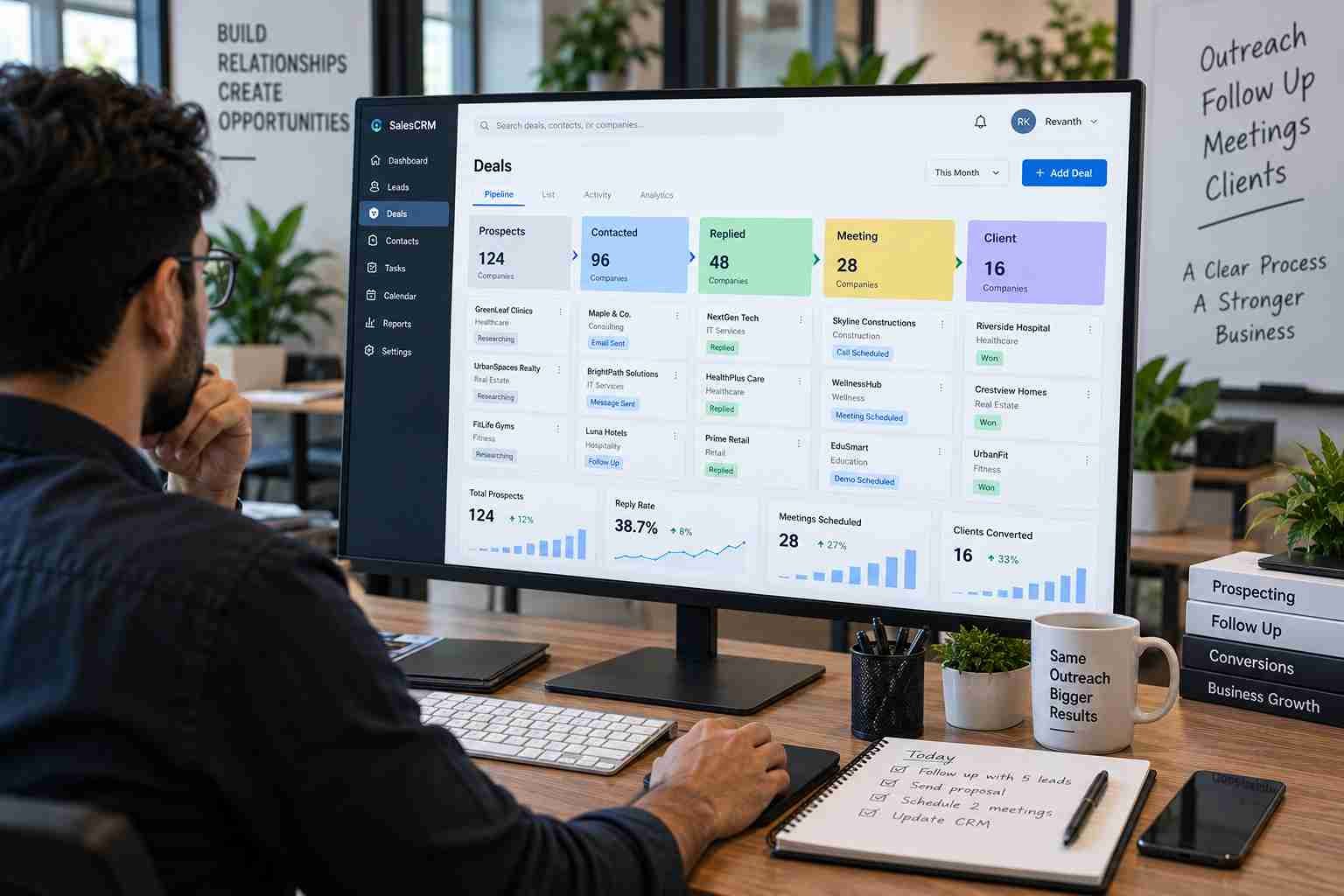 Without tracking, you're guessing. An outreach CRM or organized spreadsheet should log:
Field | Example |
Company | ABC Technologies |
Contact | Founder |
Industry | Fintech |
Channel | |
Date Contacted | Sept 11 |
Response | Interested |
Follow-Up Date | Sept 15 |
Status | Meeting Scheduled |
Track these core metrics to refine your lead generation strategies over time:
Metric | Why It Matters |
Prospects researched | Measures pipeline volume |
Response rate | Shows message relevance |
Qualified leads | Filters real opportunities |
Meetings scheduled | Tracks conversion progress |
Clients converted | Final measure of ROI |
This data tells you which channels LinkedIn, cold email, referrals, or events actually produce client conversion, so you can double down on what works.
Outbound vs Inbound: A Quick Comparison
Factor | Outbound Outreach | Inbound Marketing |
Speed to first contact | Immediate | Slow, builds over time |
Control over targeting | High you choose the prospect | Low depends on who finds you |
Cost to start | Low, mostly time | Higher, content/ad investment |
Best for | New businesses, IT services marketing, agencies | Established brands with content assets |
Most successful companies eventually run both but if you need clients now, client outreach strategies deliver faster results.
Final Thoughts on Getting Clients
 Learning how to get clients isn't about sending more messages it's about sending the right ones to the right people, then following up with purpose. Relationship building, not volume, is what turns a cold prospect into a paying client.
FAQ Section
1. What is the fastest way to get clients as a new business? Combine a narrow Ideal Customer Profile with LinkedIn outreach for B2B and cold email outreach. Targeted, personalized messages convert faster than broad advertising for new businesses without an existing audience.
2. How many follow-ups should I send before giving up on a prospect? Most effective outreach follow-up strategies use 3–5 follow-ups spaced over several weeks, each adding new value rather than repeating the same ask.
3. Is cold email outreach still effective in 2026? Yes, when personalized and targeted to a well-defined ICP. Generic, mass-sent emails perform poorly, but relevant, research-backed emails still generate meaningful response rates.
4. What's the difference between outreach and inbound marketing? Outreach means proactively contacting prospects; inbound means prospects find you through content, ads, or search. Outreach offers more control over timing and targeting.
5. Do I need a CRM to track outreach activity? A CRM isn't mandatory, but tracking outreach activity even in a spreadsheet is essential to understand which channels produce qualified leads and meetings scheduled.
6. How important is a referral network for business growth? Very. A referral network for business typically converts faster than cold outreach because trust is already established through the referring relationship.
7. What should a strong outreach email include? A personalized opening, one relevant observation about the prospect's business, the challenge you can solve, and a single clear call to action not a full list of services.
Conclusion
 There's no single trick to how to get clients it's the combination of a clear ICP, multi-channel prospecting, personalized messaging, disciplined follow-up, and consistent tracking that builds a reliable pipeline. Start with one channel, whether that's LinkedIn outreach for B2B or cold email outreach, master the follow-up, and expand from there. If you're ready to turn these client outreach strategies into a working system, start by defining your ICP today and sending five personalized messages before the week is out momentum starts with the first outreach, not the perfect plan.
Mastering LinkedIn Outreach in 2026: A Complete Guide
How AI Is Transforming Modern Sales Processes in 2026
Business Process Automation: A Developer's Guide to Streamlining Sales, Leads, and Daily Operations
Why Your Business Isn't Getting Leads from Social Media And How to Fix It